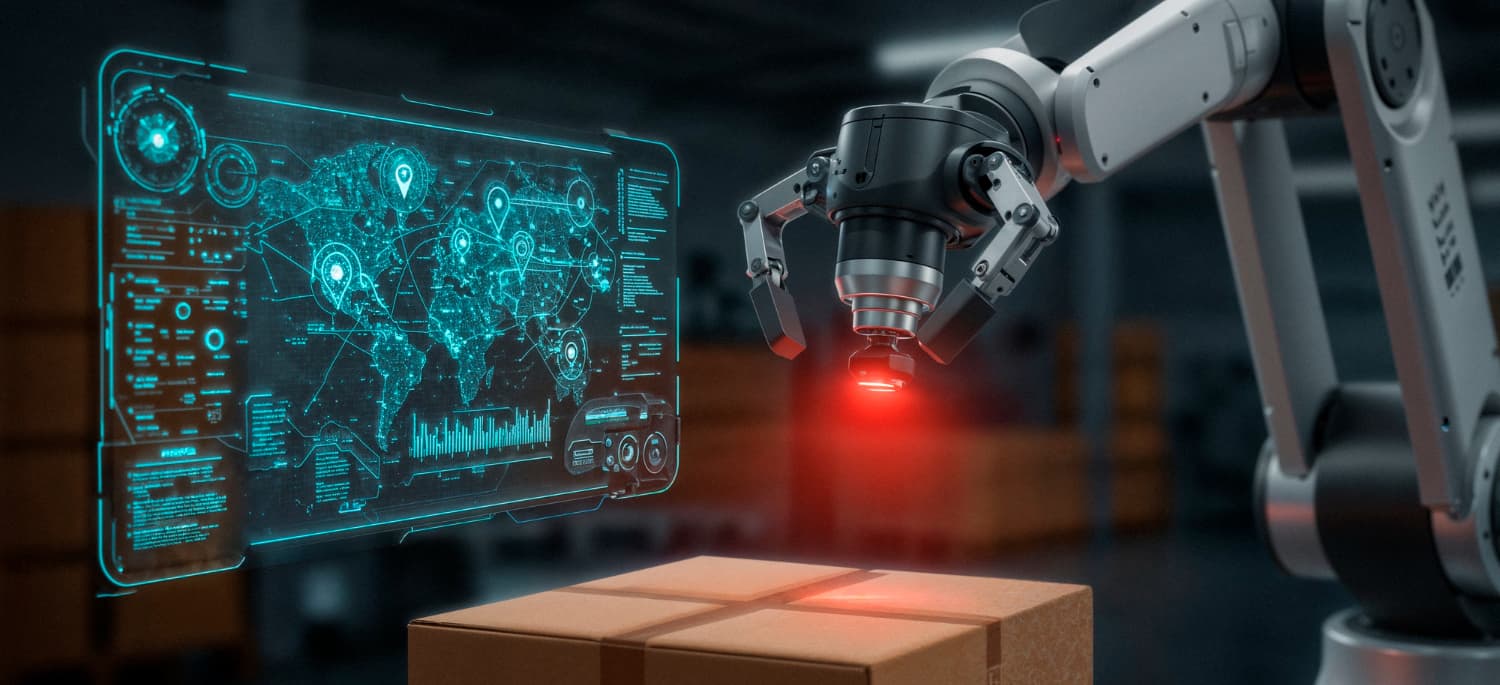

Imagine a shipment stuck at a port for 48 hours due to an unnoticed customs discrepancy. Or a fleet of trucks burning excess fuel because of an undetected route deviation. These aren’t rare events, they’re daily realities in modern logistics.
With supply chains now spanning continents, systems, and partners, even small irregularities can cascade into delays, financial losses, or compliance violations. Traditional monitoring reacts after the damage is done. AI changes that.
According to Precedence Research, the global AI in logistics market is valued at USD 26.35 billion in 2025 and is projected to reach USD 707.75 billion by 2034, growing at a CAGR of 44.40%. This explosive growth reflects one truth: AI isn’t just a tool, it’s becoming the backbone of resilient supply chains.
In this blog, we’ll walk you through what anomalies are, how AI detects them in real time, which tools power the process, and how to integrate them with your existing logistics platforms. By the end, you’ll see how proactive intelligence turns risks into opportunities.
What Are Anomalies in Logistics?
An anomaly is any deviation from expected operational behavior. It’s the red flag in a sea of green data points.
Common examples include:
- A shipment delayed beyond its estimated arrival window
- Duplicate or fraudulent invoices slipping through billing
- Sudden spikes in fuel consumption on a standard route
- Idle warehouse space during peak demand
- Data mismatches between systems (e.g., inventory vs. shipping logs)
These issues often originate in Enterprise Resource Planning (ERP) systems, central platforms that manage inventory, orders, finance, and supply chain workflows. One popular example is Microsoft Dynamics 365 (D365), a cloud-based ERP used by thousands of logistics firms worldwide.
The challenge? Logistics generates petabytes of real-time data from GPS trackers, IoT sensors, billing systems, and partner APIs. No human team can monitor it all.
That’s where AI-powered anomaly detection steps in, analyzing thousands of data points per second to spot irregularities before they escalate.
How AI Detects Anomalies: A 5-Step Framework
AI doesn’t just flag problems, it learns, predicts, and automates responses. Here’s how it works across a typical logistics operation, integrated with platforms like Dynamics 365, Power BI, and Azure AI.
Step 1: Unified Data Collection & Integration
AI begins by pulling data from every touchpoint:
- GPS and telematics (location, speed, temperature)
- IoT sensors (container conditions, warehouse humidity)
- ERP systems (D365 order and inventory logs)
- Invoicing and partner platforms
- Mobile apps used by drivers and field teams
Using tools like Power Automate and custom .NET APIs, this data, structured and unstructured, is funneled into a centralized analytics layer on Azure AI. The result? A 360° view of your supply chain in real time.
Think of it as connecting all your silos into one intelligent brain.
Step 2: Establishing the “Normal” Baseline
Machine Learning models analyze historical data to define what “normal” looks like:
- Average transit time per route
- Typical fuel usage per vehicle type
- Standard invoice patterns by vendor
- Expected warehouse throughput
This baseline model becomes the benchmark. Any future data point that deviates significantly is flagged for review.
The more data the system processes, the smarter the baseline becomes.
Step 3: Real-Time Monitoring & Instant Alerts
AI continuously compares live data streams against the baseline.
When a deviation occurs, say, a truck idling for 3 hours or an invoice total 40% above average, it’s immediately detected.
Alerts are delivered via:
- Power BI dashboards – interactive visuals for ops managers
- In-app notifications in ERP (such as SAP, Oracle, Microsoft Dynamics 365, ERPNext and Odoo) – for operations, finance and logistics teams
- Mobile push alerts – for drivers and field supervisors
Predictive layers even forecast risks: “Traffic + weather = 2-hour delay on Route 7”.
Step 4: Risk Scoring & Automated Actions
Every anomaly is scored by severity:
| Risk Level | Example | Automated Response |
|---|---|---|
| Low | Minor data mismatch | Log for review |
| Medium | Unexpected delay or overcharge | Notify supervisor |
| High | Potential fraud or system failure | Block invoice, escalate |
Power Automate workflows trigger instant actions:
- Block duplicate payments
- Reroute shipments
- Notify vendors or carriers
- Log incidents in SharePoint for compliance audits
No manual emails. No missed escalations. Just swift, accountable fixes.
Step 5: Continuous Learning & Optimization
Every detected anomaly feeds back into the AI model.
Over time, the system:
- Refines route planning
- Improves vendor scorecards
- Optimizes fleet utilization
- Forecasts costs with higher accuracy
It evolves from reactive to proactive, a self-improving logistics nervous system.
AI Tools Powering Anomaly Detection in Logistics
Logistics leaders use a mix of open-source algorithms, cloud platforms, and custom solutions. The key? Seamless integration with existing logistics platforms, whether ERP, TMS, WMS, or IoT ecosystems.
Here are the most effective tools in use today:
| Tool | Type | Best For | Integration Advantage |
|---|---|---|---|
| Isolation Forest | ML Algorithm | Outlier detection in routes, fuel, delivery times | Lightweight; runs on edge devices or cloud |
| DBSCAN | Clustering Algorithm | Geospatial anomalies (irregular delivery clusters) | Ideal for GPS and warehouse heatmaps |
| Neural Networks (Autoencoders, LSTM) | Deep Learning | Time-series anomalies (sensor drifts, demand spikes) | Adapts to dynamic conditions |
| AWS Lookout for Metrics | Cloud AI Service | KPI monitoring (on-time delivery, freight cost) | No-code; auto-alerts |
| Azure Anomaly Detector | Cloud API | Real-time detection in streaming data | Native integration with Dynamics 365, Power BI, and Azure IoT |
Pro Tip:These tools shine when integrated with your core logistics platforms. For example, Azure Anomaly Detector can pull live data from D365, visualize risks in Power BI, and trigger workflows in Power Automate, all without custom coding.
Many companies also build custom AI models tailored to their unique workflows, ensuring end-to-end alignment.
The Future: From Predictive to Prescriptive Logistics
Tomorrow’s AI won’t just detect risks, it will prescribe the optimal response.
| Today (Predictive) | Tomorrow (Prescriptive) |
|---|---|
| “This shipment will be delayed.” | “Reroute via Route B to arrive on time, ETA improved by 4 hours.” |
| “Fuel usage is 25% above normal.” | “Switch to hybrid fleet on this lane to save $12K/month.” |
Other emerging trends:
- AI + Blockchain → Tamper-proof shipment records and smart contracts
- IoT-Driven AI → Predictive maintenance via real-time sensor health
- Autonomous Orchestration → AI managing entire supply chains with minimal human input
The result? A resilient, self-optimizing logistics network.
Conclusion: Turn Risks into Competitive Advantage
Anomaly detection is no longer a “nice-to-have.” In a world of thin margins and tight SLAs, it’s your insurance policy against disruption.
AI transforms raw data into foresight, speed, and control. From catching invoice fraud in milliseconds to rerouting fleets before delays occur, intelligent systems keep your supply chain one step ahead.
At Synoverge Technologies, we help logistics leaders implement AI-driven anomaly detection using:
- Microsoft Dynamics 365 for unified operations
- Power Platform for automation and analytics
- Azure AI & IoT for real-time intelligence
- Custom ML models tailored to your workflows
We’ve helped clients reduce delays by 37%, cut fraud losses by 62%, and improve on-time delivery to 98%+
Ready to make your supply chain smarter? Contact Synoverge today to explore AI-powered logistics solutions designed for your business.
FAQs
1. What is anomaly detection in logistics?
Anomaly detection in logistics identifies unusual patterns or irregularities, like shipment delays or duplicate invoices, using AI and data analytics to prevent operational risks and inefficiencies.
2. How does AI help in preventing logistics risks?
AI helps prevent logistics risks by analyzing real-time data, detecting anomalies instantly, and automating corrective actions to ensure smoother operations and reduced delays or financial losses.
3. Which AI tools are used for anomaly detection in logistics?
Popular AI tools include Isolation Forest, DBSCAN, Neural Networks, AWS Lookout for Metrics, and Azure Anomaly Detector, each helping detect anomalies across transportation, billing, and inventory systems.
4. What is the difference between predictive and prescriptive AI in logistics?
Predictive AI forecasts potential risks like delays or breakdowns, while prescriptive AI recommends the best corrective actions to optimize operations and maintain supply chain efficiency.
5. How can Synoverge Technologies help integrate AI into logistics operations?
Synoverge Technologies specializes in implementing AI-powered logistics solutions, integrating platforms like Microsoft Dynamics 365, Power Platform, and IoT systems to enhance visibility, accuracy, and decision-making.
Table of Contents


Related Blogs

Software Development, Artificial Intelligence
Guide to SharePoint Syntex - Best Practices & Real-World Use Cases
By Vishwas Goswami May 12, 2025
Learn about SharePoint Syntex, real-world use cases, best practices for implementations, and how it will be helpful in improving productivity.


Software Testing
What Is BDD? Complete Guide to Behavior Driven Development
By Mehul Halari 21 July, 2025
Learn how Behavior Driven Development (BDD) improves collaboration, automates testing, and enhances Agile software delivery.

Microsoft D365
Microsoft Dynamics 365 Copilot services
By Jayanta Sarkar March 04, 2025
Artificial Intelligence is fast becoming an integral part of our daily work lives. From virtual assistants to predictive algorithms, AI is seamlessly woven into the fabric of modern technology, enhancing efficiency, convenience, and experiences.