
Artificial intelligence is rapidly transforming the software engineering landscape. What initially started as AI-assisted coding is now evolving into something far broader: AI-assisted software delivery.
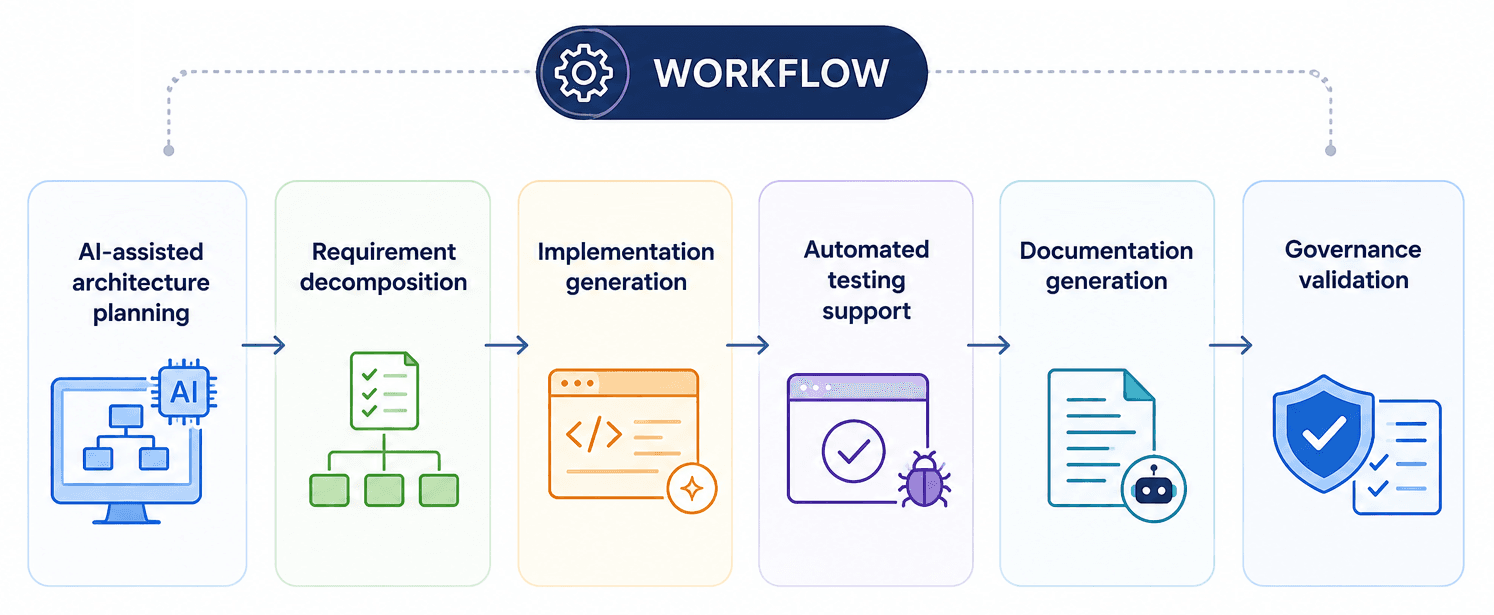
Organizations are no longer exploring AI only for code generation. They are increasingly evaluating how intelligent systems can support architecture planning, governance, testing, documentation, operational workflows, and lifecycle orchestration across the entire Software Development Lifecycle (SDLC).
This evolution is giving rise to what many engineering leaders now refer to as AI-DLC (AI-Driven Development Lifecycle), a more structured approach to integrating AI into software engineering processes.
In our previous blog, we explored the emergence of AI-DLC and how AI systems are beginning to influence the broader software delivery lifecycle, laying the foundation for more intelligent and AI-assisted engineering ecosystems.
However, while AI coding tools have become widely accessible, scaling AI-assisted delivery across teams introduces a completely different set of challenges.
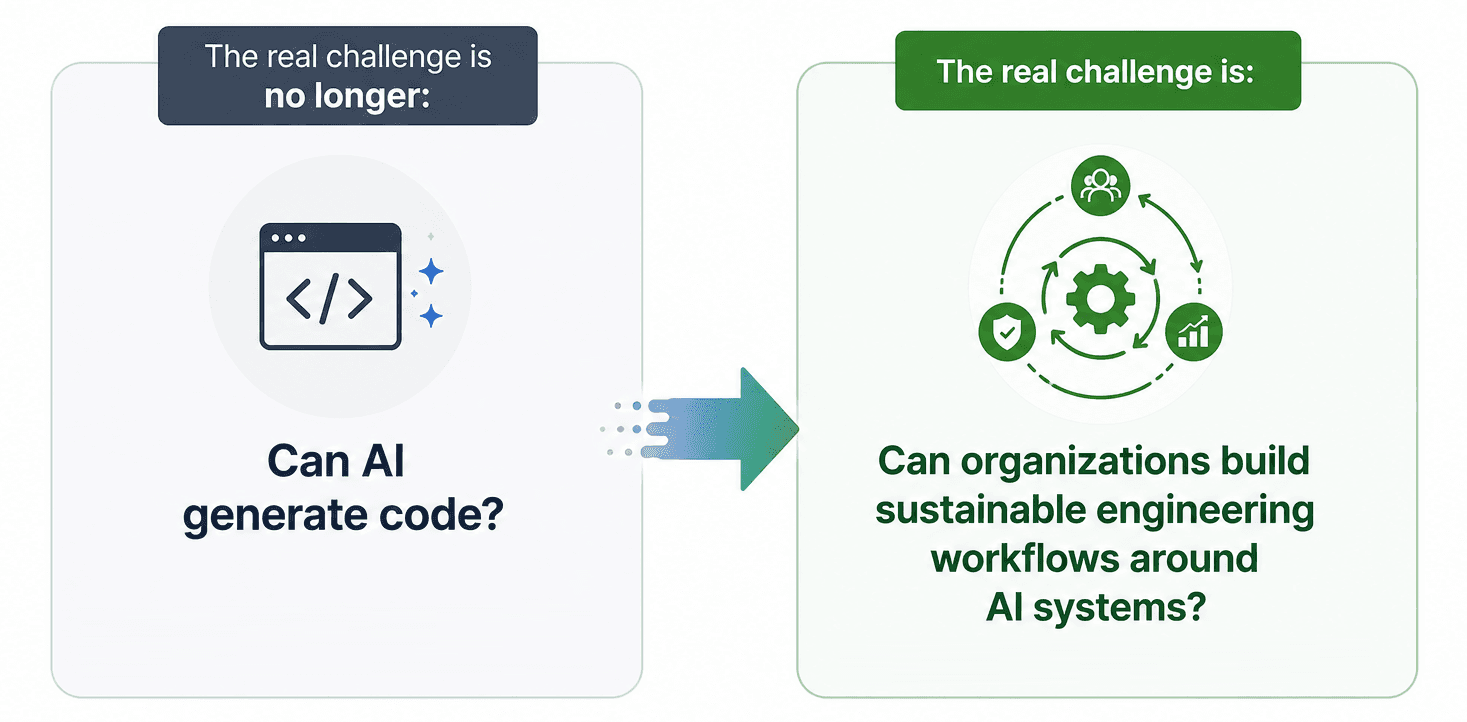
As companies move beyond experimentation, success increasingly depends on how effectively teams manage:
Context
Workflows
Standards
Continuity
Consistency
In many ways, AI-DLC is less about replacing developers and more about redesigning how engineering systems operate in collaboration with intelligent systems.
Why AI-DLC Matters Now
Modern engineering teams are under constant pressure to:
AI systems offer significant opportunities to improve productivity, but without structured workflows, organizations often encounter:
- Inconsistent outputs
- Fragmented engineering decisions
- Duplicated efforts
- Governance risks
- Poor lifecycle traceability
This is where AI-DLC becomes important.
Rather than treating AI as an isolated productivity tool, AI-DLC focuses on integrating AI into the broader software delivery ecosystem.
Working Solo vs Working in Teams
In our previous article, AI-DLC: The Future of AI-Driven Software Development, we explored how AI adoption maturity differs across greenfield and brownfield environments. As organizations progress from experimentation to enterprise-wide implementation, another important distinction emerges: solo developers and engineering teams often experience AI in fundamentally different ways.
Solo Development Workflows
Individual developers often benefit from:
A. Fast feedback loops
B. Uninterrupted context
C. Rapid experimentation
D. Minimal coordination overhead
Modern AI-driven workflows combine intelligent IDEs, reusable prompts, project instruction files to deliver faster development cycles and improved productivity, making them ideal for MVPs, prototypes, internal applications, and new product initiatives.
However, solo AI workflows can also introduce risks:
1. Over-reliance on generated solutions
2. Limited architectural validation
3. Hidden technical assumptions
4. Inconsistent engineering standards
5. Weak governance practices
AI often feels highly effective in solo workflows because the context remains centralized, reducing fragmentation and decision overhead.
Team-Based Development
As AI adoption scales across teams, the challenge shifts from code generation to context management.
Engineering teams commonly encounter:
A. Fragmented context sharing
B. Inconsistent prompting practices
C. Duplicated architectural reasoning
D. Unclear ownership of AI-generated code
E. Governance inconsistencies
F. Divergent engineering conventions
Successful teams typically address these challenges through:
1. Shared architectural guidance
2. Reusable engineering workflows
3. Persistent context systems
4. Governance standards
5. Lifecycle orchestration
This is where more structured AI-DLC approaches begin delivering meaningful value.
Rule Files vs Structured AI-DLC Systems
One of the most common discussions within engineering organizations is whether lightweight AI workflows are sufficient or whether broader AI-DLC systems are necessary.
In reality, both approaches solve different problems.
Lightweight Rule-Based Workflows
Simple rule systems combined with AI IDEs are highly effective for:
These workflows are attractive because they are:
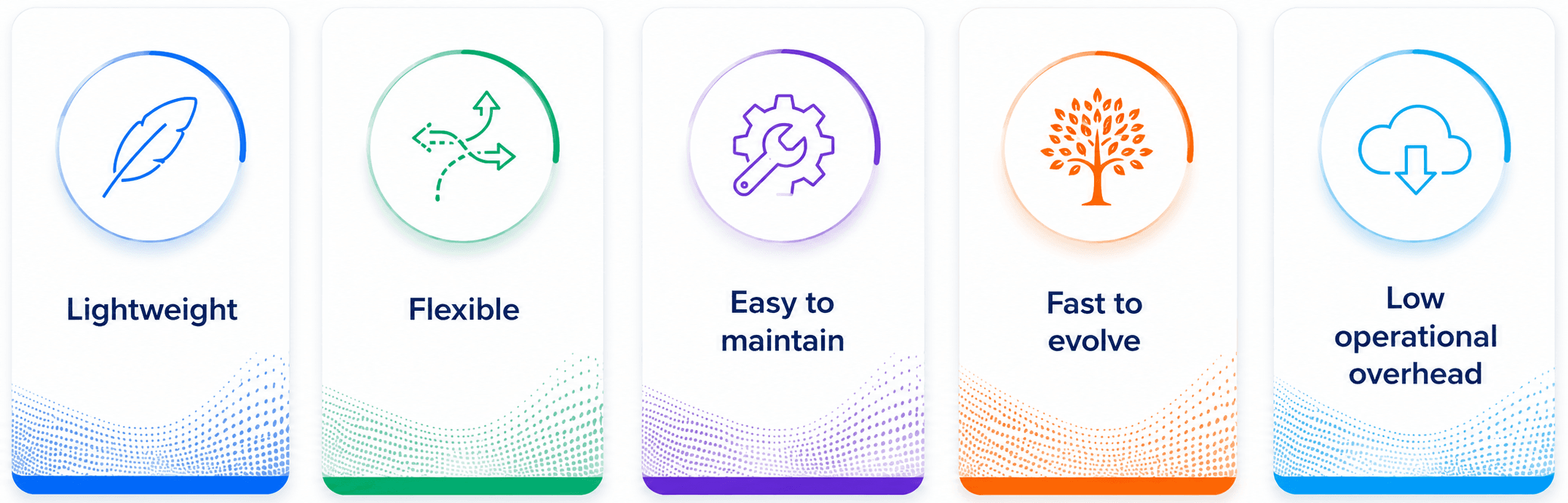
For many teams, this level of AI integration already provides substantial productivity gains, for example:
A frontend developer using:
- Reusable prompts
- Coding standards
- Project instruction files
- Component templates
can accelerate UI development significantly without requiring organization-wide AI governance systems.
Structured AI-DLC Approaches
As organizations mature, they often require more structured lifecycle systems to maintain engineering consistency across multiple teams and projects.
Structured AI-DLC systems become valuable when organizations need:
The value here is not necessarily “better code generation.”
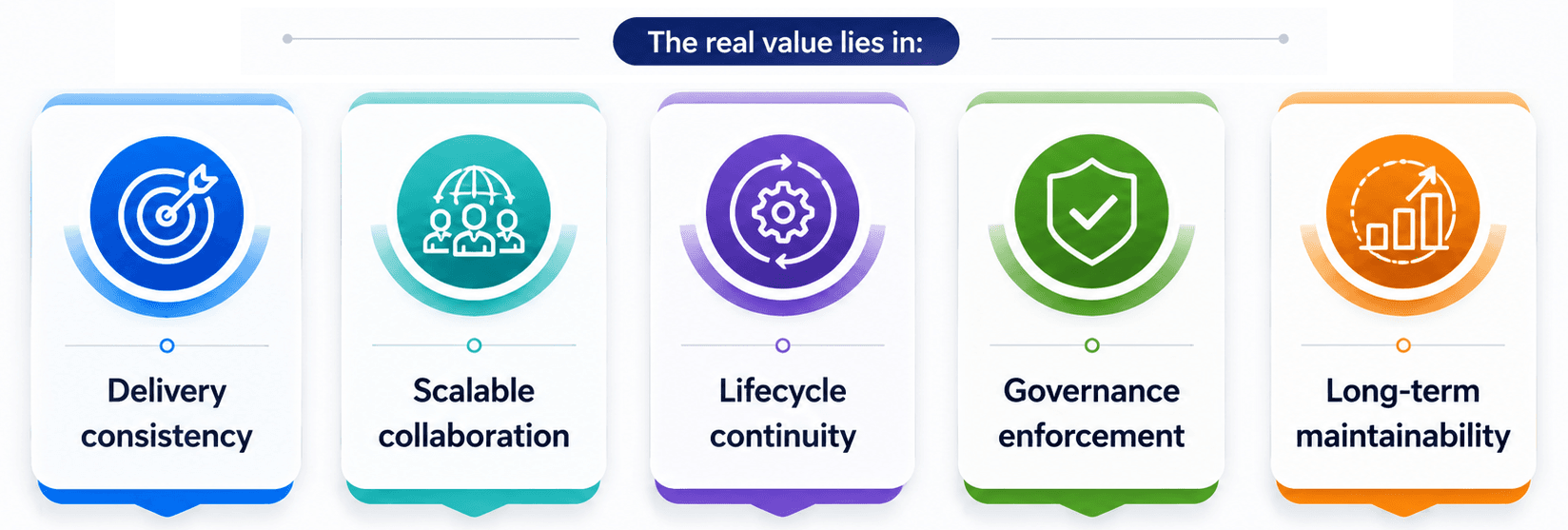
A useful way to think about it is:
- Rule-based workflows optimize local developer productivity.
- Structured AI-DLC systems optimize organizational engineering consistency.
Neither approach is universally superior.
The right balance depends on:
Team size
Architecture complexity
Governance requirements
Operational maturity
Delivery scale
Practical Patterns Emerging in AI-DLC
As organizations experiment with AI-assisted delivery models, several practical patterns are beginning to emerge.
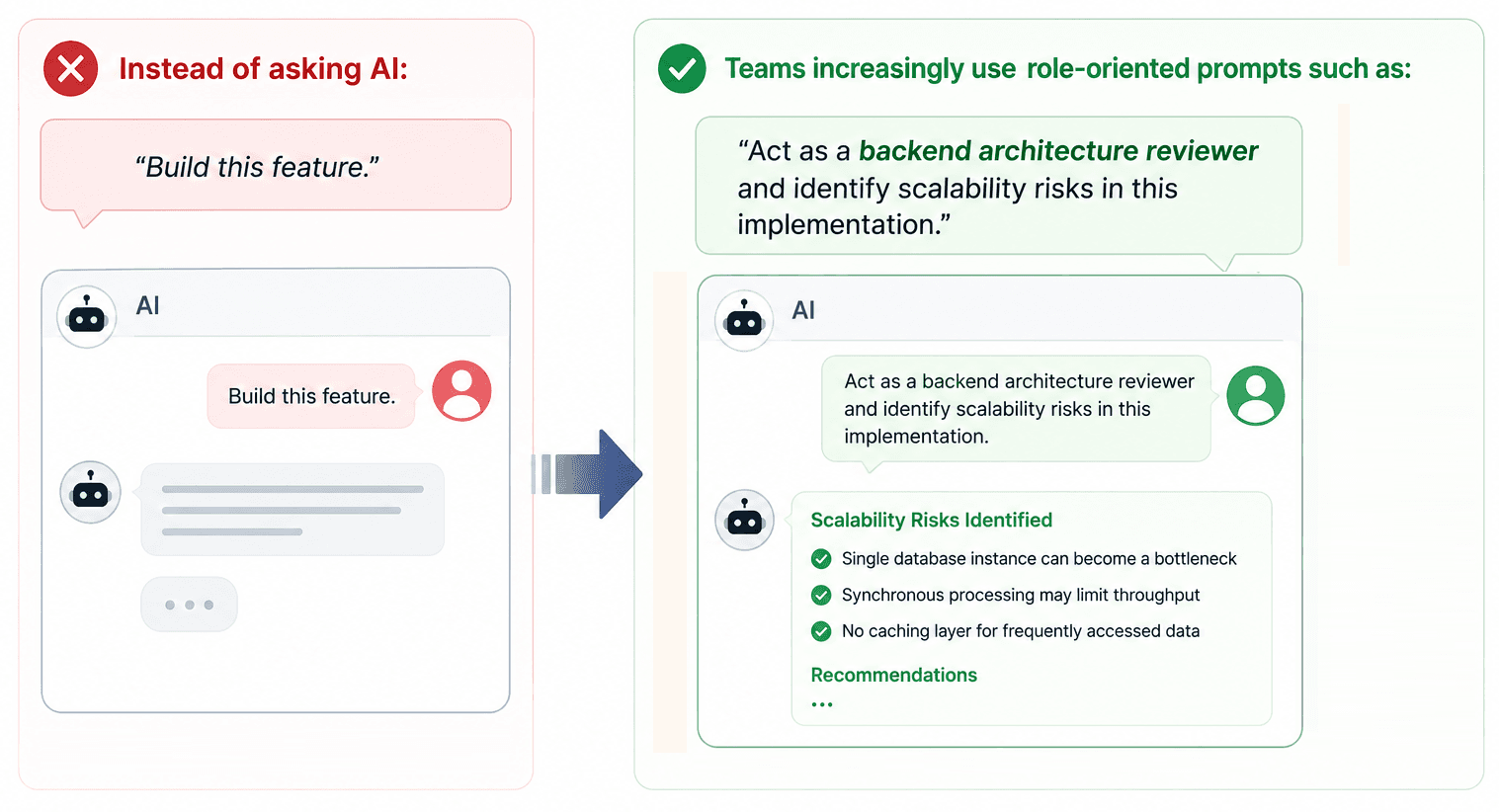
Treat AI as a Role, Not Just a Tool
AI systems become significantly more effective when assigned clearly defined responsibilities.
For example:
Architecture reviewer
Implementation assistant
Test generator
Documentation maintainer
Operational analyst
This reduces ambiguity and improves workflow consistency.
Practical Example
Separate Planning from Execution
One major maturity shift occurss when organizations separate:
Planning-oriented workflows help AI systems:
Understand system dependencies
Evaluate architectural tradeoffs
Maintain lifecycle continuity
reason across larger contexts
Execution without planning often leads to fragmented engineering outputs.
Persist Context Outside the Chat Window
One of the biggest limitations of isolated AI usage is context loss.
Sustainable AI-DLC requires durable organizational context such as:
Architecture Decision Records (ADRs)
Engineering guidelines
Governance documentation
Operational playbooks
Reusable prompt libraries
Coding conventions
Workflow templates
Without persistent context systems, AI interactions become inconsistent and difficult to scale.
Many organizations are now investing in knowledge management and contextual AI systems to improve collaboration, lifecycle continuity, and engineering consistency across distributed teams.
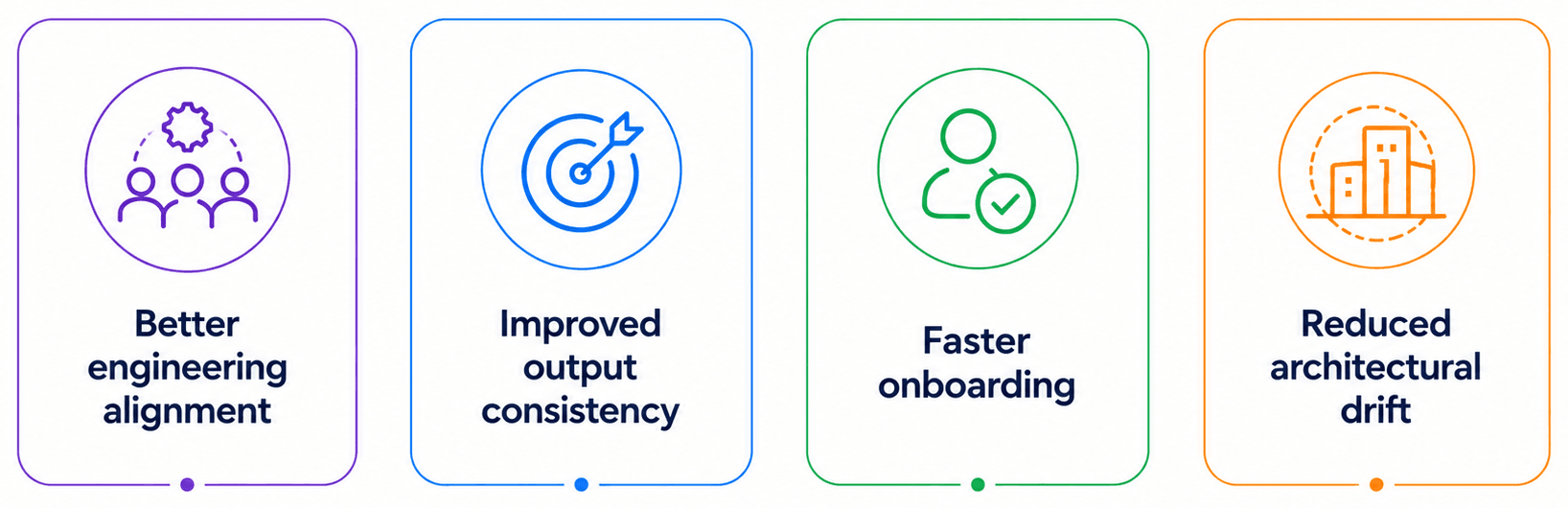
Organizations that operationalize context management often experience:
Optimize for Deterministic Collaboration
AI systems perform best when workflows are explicit rather than implicit.
High-performing engineering teams increasingly rely on:
Reusable prompts
Structured review workflows
Shared conventions
Documented architectural boundaries
Standardized engineering patterns
The more deterministic the engineering process becomes, the more effectively AI systems can participate in software delivery.
The Evolution of AI-Assisted Software Delivery
AI-DLC is still evolving rapidly.
- Many workflows remain experimental.
- Agentic systems are still maturing.
- Governance models are still emerging
- Brownfield adoption remains difficult.
However, the broader transition is already underway.
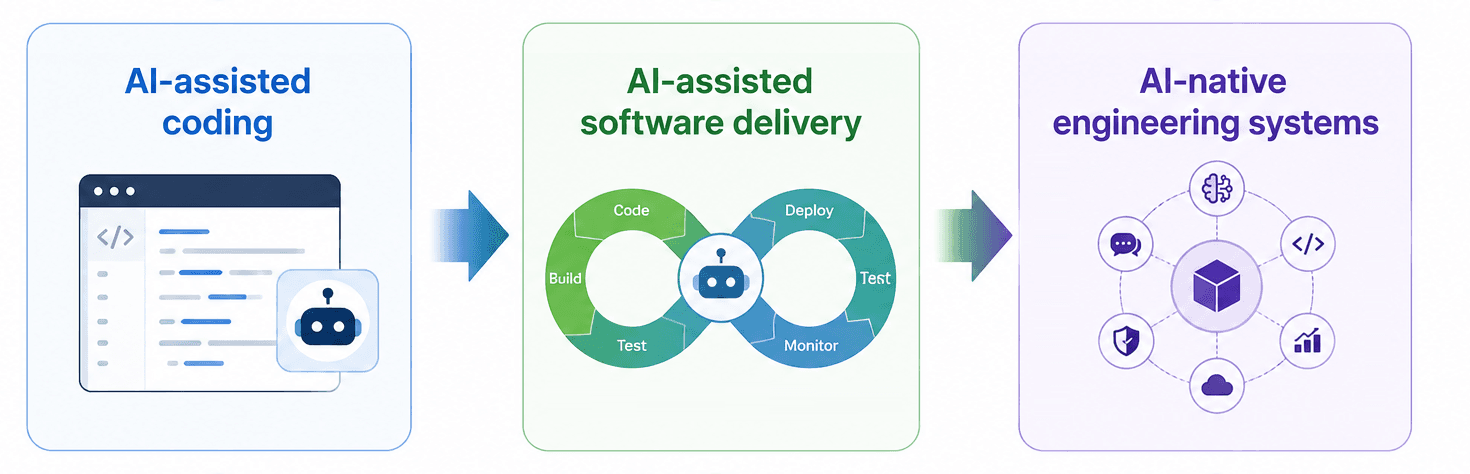
This transition is likely to reshape how software systems are:

The most important realization may be this:
AI-DLC is not fundamentally about generating code faster
It is about redesigning how software delivery systems operate in collaboration with intelligent systems.
Organizations that successfully operationalize AI-assisted delivery will likely gain long-term advantages in:
Engineering scalability
Delivery consistency
Operational efficiency
Innovation velocity
The tooling ecosystem will continue to evolve, but the transformation itself has already begun.
As discussed in AI-DLC: The Future of AI-Driven Software Development, AI adoption is ultimately a journey of engineering maturity. Together, these practices help organizations move beyond isolated AI-assisted coding toward scalable and sustainable AI-enabled software delivery.
How Synoverge Helps Organizations Scale AI-Driven Engineering
As organizations move toward AI-assisted software delivery, implementing scalable and governed engineering workflows becomes increasingly important. Successfully operationalizing AI-DLC requires more than adopting AI tools; it demands the right engineering strategy, architectural planning, governance frameworks, and modernization expertise.
At Synoverge, we help organizations accelerate digital transformation by enabling scalable, intelligent, and future-ready engineering ecosystems through:
Our engineering-focused approach helps businesses improve:
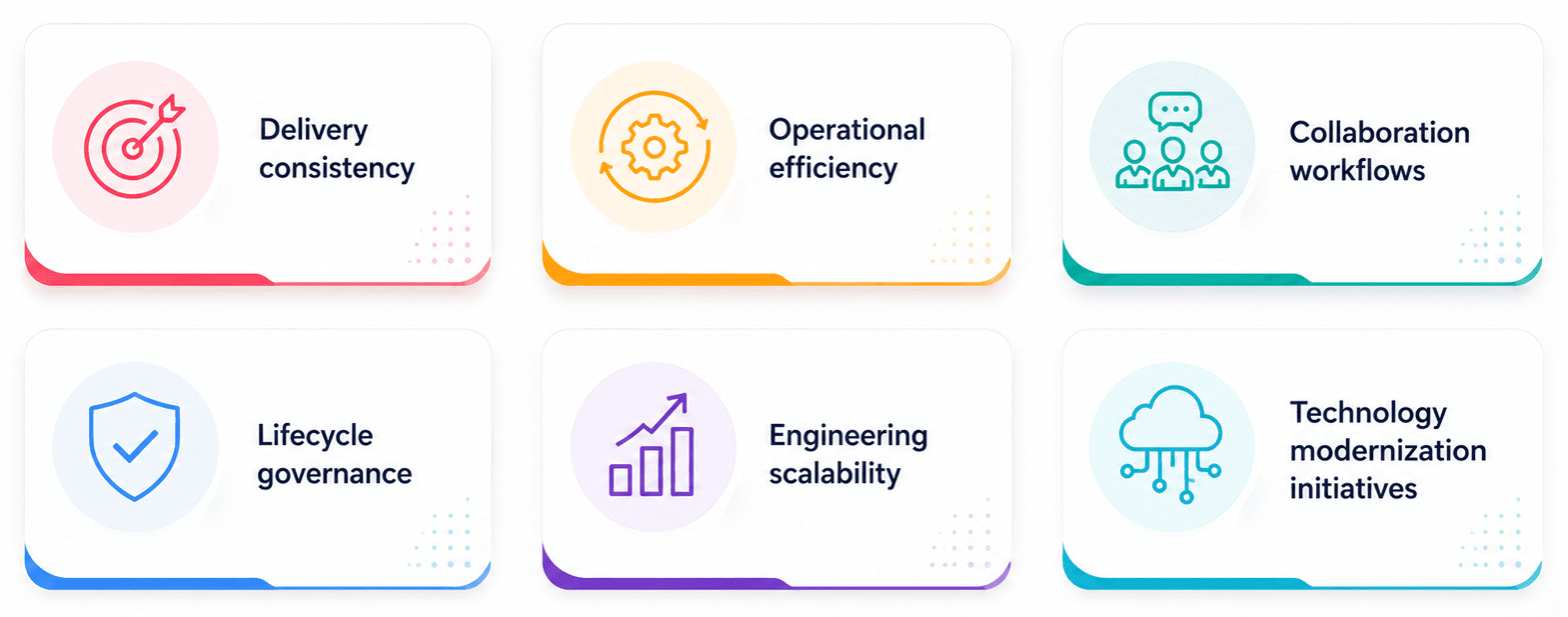
Whether organizations are exploring AI-assisted development workflows, modernizing legacy systems, or building scalable digital platforms, Synoverge helps create structured and sustainable engineering ecosystems aligned with long-term business goals.
Looking to modernize your software delivery workflows with AI-driven engineering practices?
Connect with us to explore how Synoverge can help your organization build scalable, governed, and future-ready digital engineering solutions.
Key Takeaways
- AI-DLC extends AI usage beyond code generation into full software delivery workflows.
- Scaling AI adoption requires structured context management and governance.
- Solo AI workflows and team-based AI workflows have very different operational challenges.
- Lightweight AI workflows improve developer productivity, while structured AI-DLC systems improve organizational consistency.
- Persistent engineering context is critical for sustainable AI-assisted delivery.
- AI-native engineering systems are gradually becoming the next evolution of software development.
Frequently Asked Questions (FAQs)
AI-DLC (AI-Driven Development Lifecycle) refers to the integration of AI systems across the broader software development lifecycle, including planning, architecture, coding, testing, governance, and operations.
AI coding assistants primarily focus on code generation. AI-DLC focuses on integrating AI into end-to-end software delivery workflows and engineering processes.
AI-DLC improves software delivery efficiency by helping teams automate repetitive engineering tasks, streamline collaboration workflows, improve architectural consistency, and accelerate development cycles through AI-assisted planning, testing, documentation, and operational support.
Yes, but implementation in brownfield or legacy environments can be more complex. Organizations often need structured context management, architecture documentation, governance standards, and workflow modernization to successfully integrate AI-assisted engineering into existing systems.
Governance is a critical component of AI-DLC. Organizations need governance frameworks to ensure AI-generated outputs align with security standards, compliance policies, engineering guidelines, architectural requirements, and operational best practices.
Teams maintain consistency by using shared engineering standards, reusable prompts, architecture documentation, coding conventions, workflow templates, and persistent context systems. Structured collaboration models help reduce fragmented AI outputs across teams.
No. AI-DLC principles can benefit startups, mid-sized businesses, and enterprises. Smaller teams may use lightweight AI workflows, while larger organizations often require more structured AI-DLC systems to manage scalability, governance, and cross-team collaboration effectively.
AI systems perform more effectively when they have access to structured and persistent engineering context such as architecture documents, governance standards, workflows, and operational guidelines.
Not always. Lightweight workflows work well for individuals and small teams, while larger organizations often require structured AI-DLC systems to maintain consistency and governance.
Common challenges include fragmented context, governance risks, brownfield system complexity, inconsistent workflows, and organizational readiness.
Table of Contents
- Artificial intelligence is rapidly transforming
- Why AI-DLC Matters Now
- Working Solo vs Working in Teams
- Rule Files vs Structured AI-DLC Systems
- Practical Patterns Emerging in AI-DLC
- The Evolution of AI-Assisted Software Delivery
- How Synoverge Helps Organizations Scale AI-Driven Engineering
- Key Takeaways
- Frequently Asked Questions (FAQs)


Ready to Enhance Your Software Delivery Process?
Consult Synoverge experts to implement agile AI-DLC strategies.
Contact UsRelated Blogs
Artificial Intelligence
How AI Detects Anomalies and Prevents Risks in Logistics?
By Sagar Vaidya 06 Jan, 2026
Discover how AI in logistics enhances visibility, detects anomalies, and prevents risks using real-time analytics, predictive insights, and automated decision-making.


Software Development
Designing Resilient APIs: Timeouts, Retries & Circuit Breakers
By Viren Purohit 06 Oct, 2026
Learn how to build resilient APIs using timeouts, retries, exponential backoff, jitter, and circuit breakers to prevent cascading system failures.
Software Development, Artificial Intelligence
AI-DLC: The Future of AI-Driven Software Development
By Viren Purohit 08 Jun, 2026
Discover how AI-DLC enables AI-assisted software delivery, operational intelligence, scalable engineering workflows, and AI-native development ecosystems for enterprises.