

An API can remain healthy at the dependency level and still fail under pressure.
A sudden customer surge, a faulty client, a runaway integration, an automated job, or a scraper can generate far more traffic than the system was designed to handle. If workloads share the same resources, one noisy workload can also affect completely unrelated operations
Resilience therefore isn't only about recovering from downstream failures. It's also about protecting API capacity, isolating workloads, preserving critical functionality, moving non-critical work off the critical path, and understanding what is happening when things go wrong.
This article focuses on the patterns that help achieve that:
- Rate limiting
- 429 Too Many Requests
- Bulkheads
- Graceful degradation
- Asynchronous processing
- Observability
- Meaningful error responses
Together, these mechanisms help prevent traffic spikes and partial failures from becoming system-wide incidents.
Rate Limiting: Protect Your API From Excessive Traffic
Resilience isn't only about downstream failures - your own API can become the bottleneck.
Traffic can spike because of a sudden customer surge, a faulty client, a runaway integration, automated jobs, scrapers, or unexpected production events.
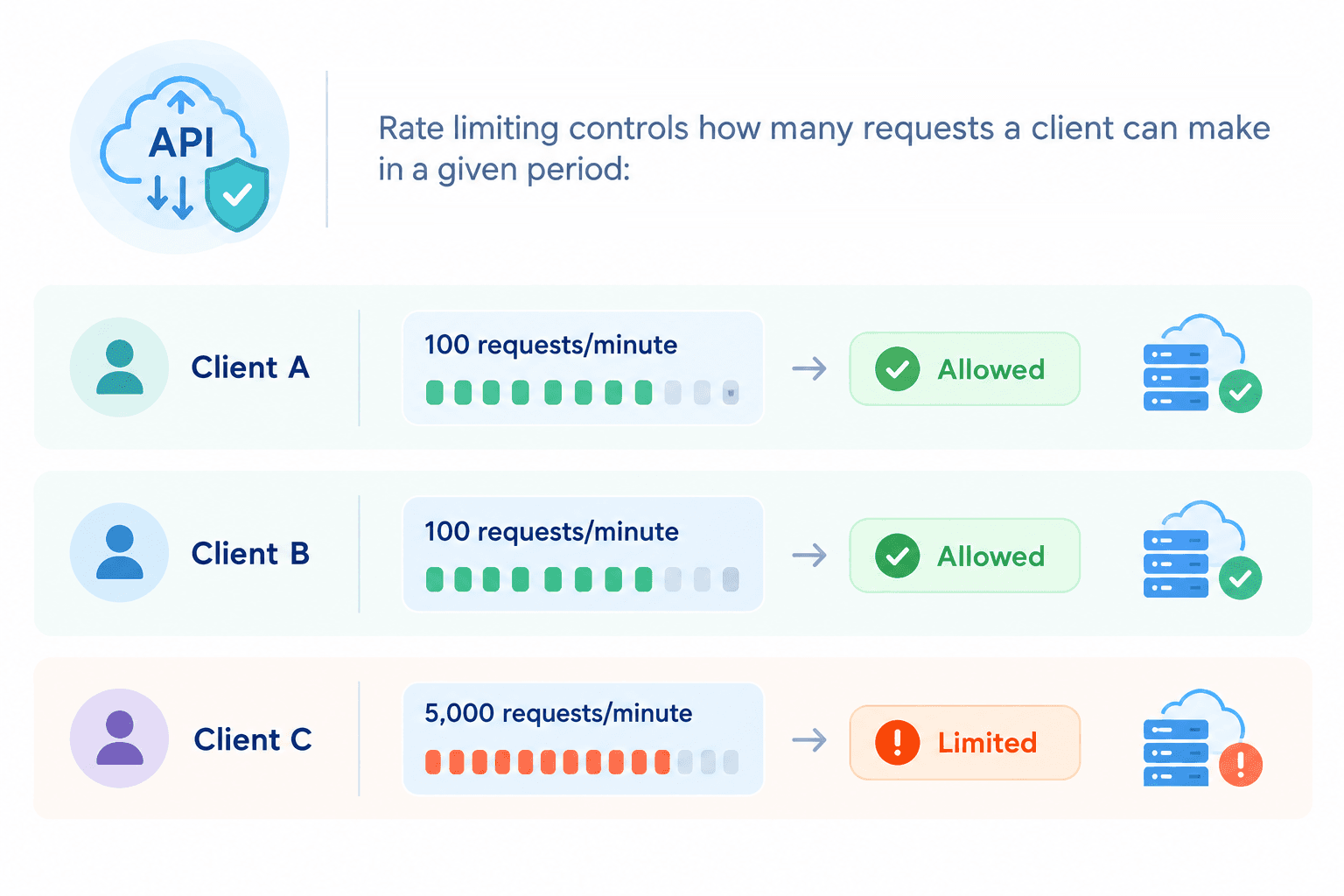
Common approaches include:
- Fixed window
- Sliding window
- Token bucket
- Leaky bucket
Limits can be applied by:
- IP address
- User
- API key
- Tenant
- Client application
- Endpoint
- Subscription tier
At its core, rate limiting is a resource-protection mechanism - it keeps any single client or workload from consuming an unfair share of the API's capacity.
Return the Right Response When Rate Limited
When a client exceeds a rate limit, HTTP gives you 429 Too Many Requests:
HTTP/1.1 429 Too Many Requests
Retry-After: 30
The Retry-After header tells clients when it's reasonable to try again.
This matters because a rate-limited response shouldn't just say "request failed" - clients need enough information to behave correctly.
A well-designed API can also expose additional rate-limit details through response headers, depending on its contract.
A rate-limited response should therefore protect the API while giving clients a clear way to recover.
Use Bulkheads to Isolate Failures
The bulkhead pattern borrows its name from ship design: vessels are divided into compartments so damage in one area doesn't flood the whole ship.
The same idea applies to software.
Imagine an API handling payment requests, reporting requests, and search requests. If all three share the same worker pool and connection pool, a sudden reporting spike could eat into resources payment processing needs.
Isolating them instead:
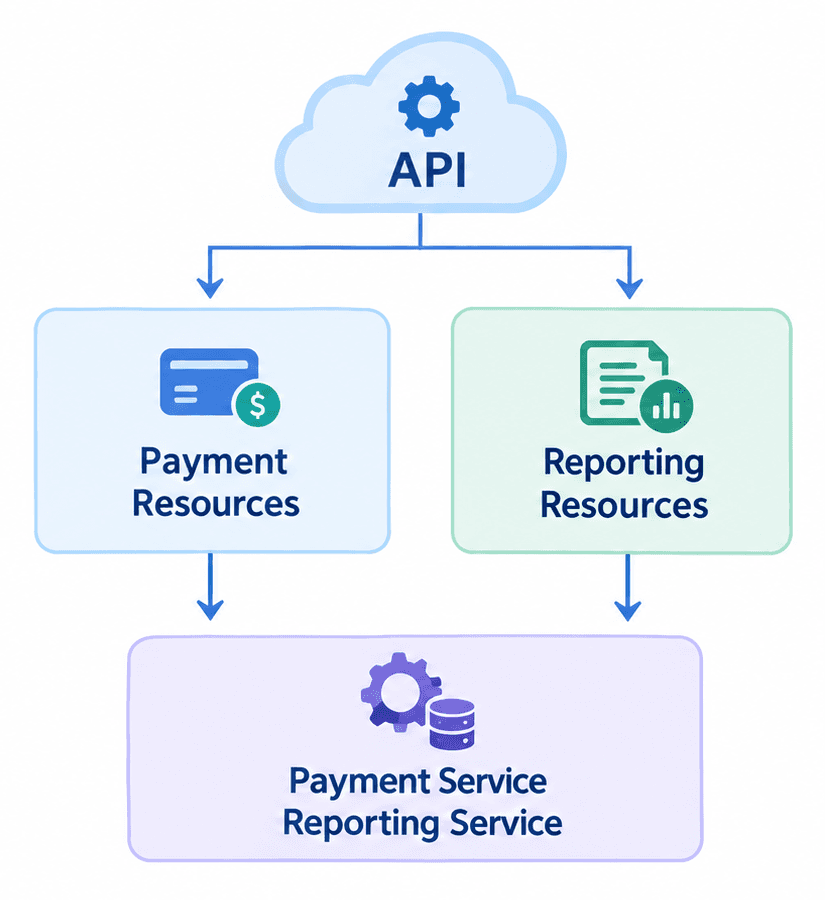
Now a reporting spike has far less impact on payments.
Bulkheads can be implemented through:
- Separate connection pools
- Separate worker pools
- Concurrency limits
- Resource quotas
- Isolated queues
- Entirely separate service instances
The goal is to shrink the blast radius of any single malfunction.
1. Inception Phase
The inception phase focuses on:
A. Understanding business requirements
B. Defining architecture boundaries
C. Identifying constraints
D. Establishing project context.
AI systems are increasingly valuable here because they reduce the cost of exploration and accelerate early-stage planning.
Teams can use AI to:
a. Generate architecture drafts
b. Synthesize requirements
c. Create ADRs (Architecture Decision Records)
d. Bootstrap project documentation
e. Define engineering conventions
f. Establish reusable project context
Why Context Systems Matter
One of the biggest challenges in AI-driven software engineering is maintaining contextual continuity.
Without structured context, AI systems struggle to maintain consistency over time.
This is why organizations are adopting:
1. Project memory systems
2. Rule files
3. Repository instructions
4. Architecture guidance
5. Lifecycle context packs.
In modern AI engineering, the challenge is often not code generation; it is context formation.
2. Construction Phase
This is currently the most visible area of AI adoption.
Developers increasingly use AI-powered IDEs and coding assistants for:
A. Implementation
B. Debugging
C. Scaffolding
D. Refactoring
E. Testing
F. Documentation updates
Modern AI workflows are also evolving beyond reactive code completion toward reasoning-oriented engineering workflows.
The following features indicate a significant maturity shift in software delivery such as:
a. Planning modes
b. Multi-step execution
c. AI agents
d. Contextual engineering systems
The Real Challenge is Not Code Generation
While AI can accelerate implementation, the larger challenge is maintaining:
1. Architectural consistency
2. Governance alignment
3. Collaboration standards
4. Contextual continuity across teams.
A solo developer can often manage context mentally.
Large engineering teams cannot scale effectively on implicit context alone.
This is why structured lifecycle guidance systems are becoming increasingly important in AI-DLC adoption.
3. Operations Phase
Operations is often overlooked in AI engineering discussions, yet it may deliver some of the most practical long-term value.
AI systems are increasingly capable of:
A. Incident summarization
B. Operational analysis
C. Alert correlation
D. Remediation guidance
E. Runbook generation
F. Automated documentation maintenance.
AI-Generated Applications vs AI-Operable Systems
There is an important distinction between:
1. AI-generated applications
2. AI-operable systems
AI-operable systems remain:
i. Observable
ii. Governable
iii. Maintainable
iv. Understandable after deployment.
As organizations mature their AI-DLC practices, operational intelligence will become a critical differentiator.
Graceful Degradation
Sometimes the right response to a dependency failure isn't to fail the whole API - it's to serve a reduced but still useful experience.
Take an e-commerce product page where the recommendation service goes down.
A fragile implementation returns a flat 500 Internal Server Error. But recommendations usually aren't essential - the page can still return product details, price, availability, and reviews, simply omitting the recommended-products section.
Other forms of graceful degradation include:
- Returning cached data
- Showing partial results
- Queueing background work
- Falling back to a default configuration
- Temporarily disabling a non-essential feature
This requires classifying dependencies as critical or non-critical up front - not every dependency deserves the same failure strategy.
Use Asynchronous Processing to Reduce Failure Propagation
Not every operation needs to happen synchronously.
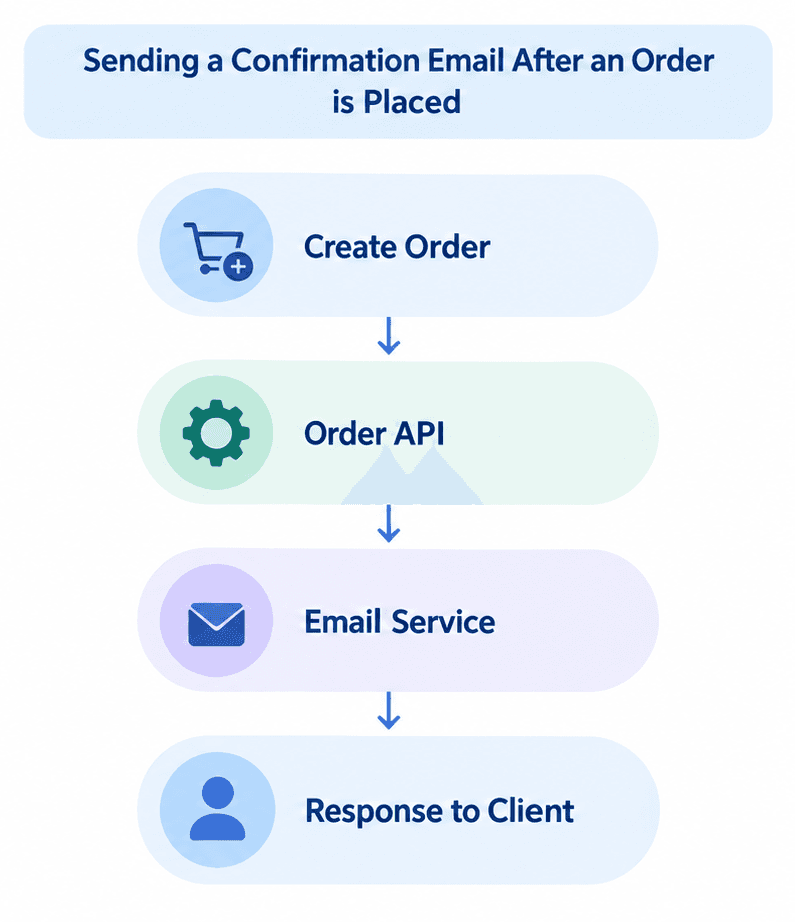
Consider sending a confirmation email after an order is placed:
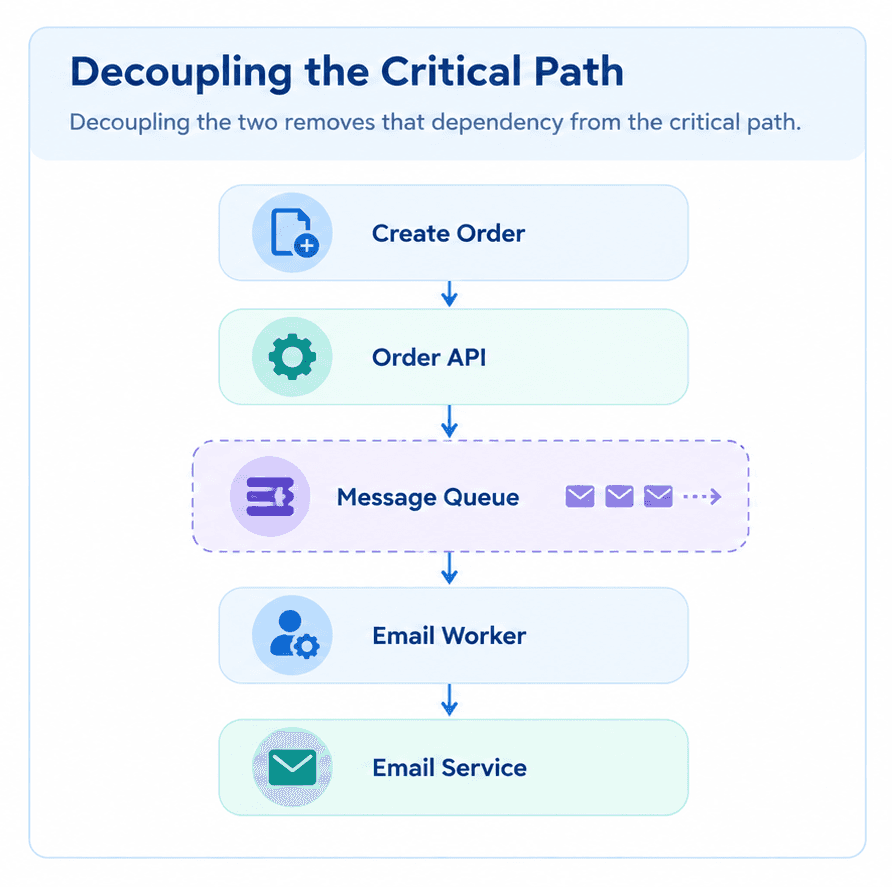
Decoupling the two removes that dependency from the critical path:
If the email service goes down, the order request itself could be delayed or fail.
Now the order can succeed even if email processing is temporarily unavailable.
The queue acts as a buffer, and it also helps smooth traffic spikes by letting work accumulate temporarily instead of forcing every request straight through the downstream service.
Observability Is Part of Resilience
You can't build a resilient system if you can't tell why it's failing.
Adding resilience mechanisms isn't enough on its own - you also need visibility into how often they activate, why, whether they're actually helping, and whether they're introducing new problems.
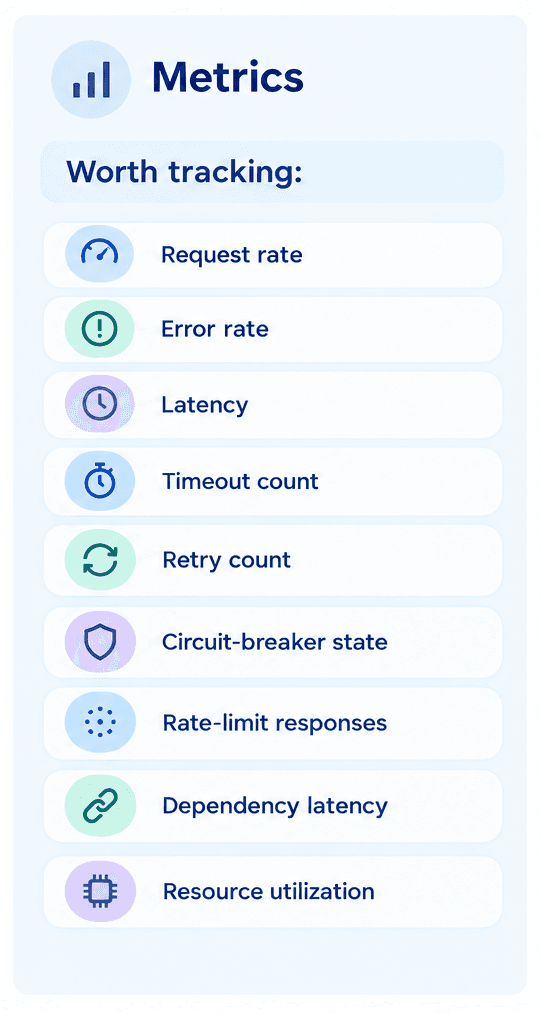
Metrics
Worth tracking:
Logs
Logs should answer:
- What failed?
- Which dependency failed?
- Which operation was running?
- How many retries occurred?
- Was the circuit open?
- Which request or correlation ID was involved?
Distributed Traces
Distributed traces help follow a request across services:
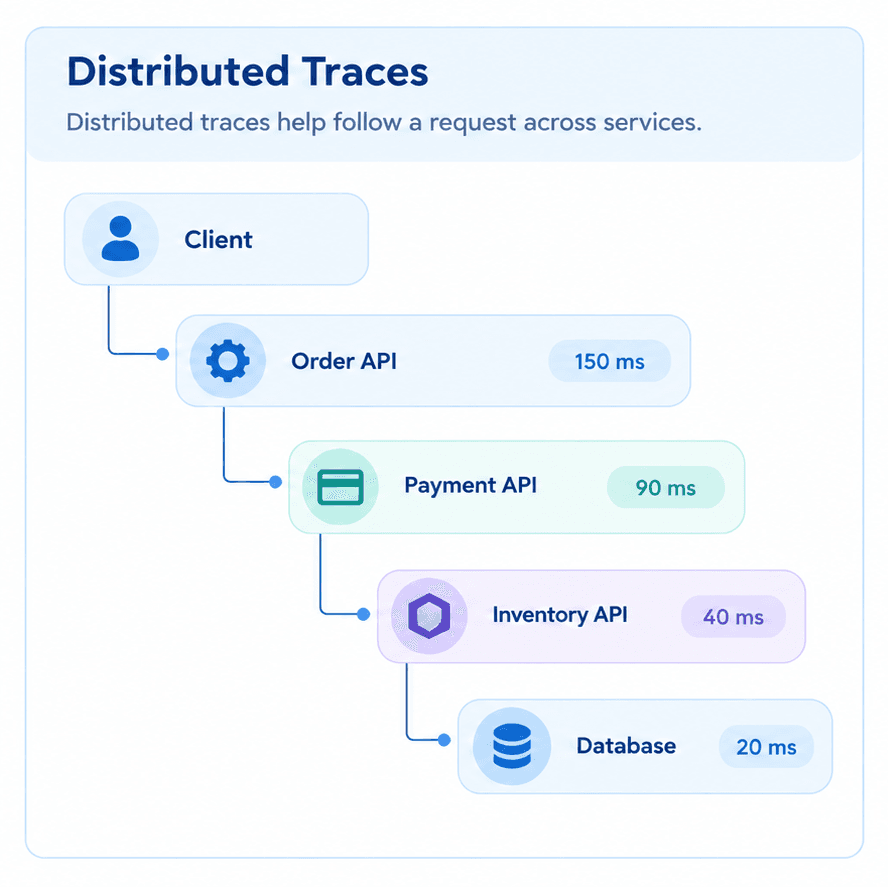
This makes it much easier to pinpoint where latency or failure actually originates.
OpenTelemetry is a good example of vendor-neutral instrumentation that covers traces, metrics, and logs together.
Don't Hide Failures Behind Generic 500 Responses
A resilient API distinguishes between different failure conditions instead of collapsing everything into a generic error:
- 400 → Invalid request
- 401 → Authentication required
- 403 → Not authorized
- 404 → Resource not found
- 409 → Conflict
- 429 → Rate limited
- 500 → Unexpected server failure
- 502 → Bad gateway/dependency response
- 503 → Service unavailable
- 504 → Gateway timeout
Clients need enough signal to know what to do next:
- Correct the request
- Authenticate again
- Retry
- Wait
- Fall back
- Stop retrying entirely
Error responses are part of the API contract and deserve the same design care as successful ones.
Common API Resilience Anti-Patterns
Even well-intentioned resilience mechanisms can create problems when they are implemented without considering the wider architecture.
One Global Rate Limit
Different endpoints can have very different resource requirements.
A simple endpoint may be inexpensive, while a reporting endpoint could trigger complex database queries.
Using exactly the same limit for everything may therefore be inappropriate.
No Resource Isolation
If all workloads share the same resources, one noisy workload can affect unrelated operations.
This defeats the purpose of having different business functions within the same system.
Unlimited Retries
Retries are not automatically resilience.
If every service retries aggressively, a temporary failure can become a traffic storm.
Retries need boundaries.
No Observability
If you cannot see timeout rates, dependency latency, retries, queue depth, or error patterns, diagnosing API reliability problems becomes guesswork.
Treating Resilience as an Infrastructure-Only Concern
Load balancers, autoscaling, API gateways, and cloud infrastructure can help.
But they cannot solve every application-level failure.
Resilience needs to be considered across:
- Application architecture
- Infrastructure
- Networking
- Databases
- External dependencies
- APIs
- Queues
- Monitoring
- Operations
Graceful Degradation Without Dependency Classification
Not every dependency is equally important.
If every dependency is treated as critical, one optional feature can bring down an otherwise functional application.
Putting API Resilience Patterns Together
The real value of these techniques shows up when they work in concert:
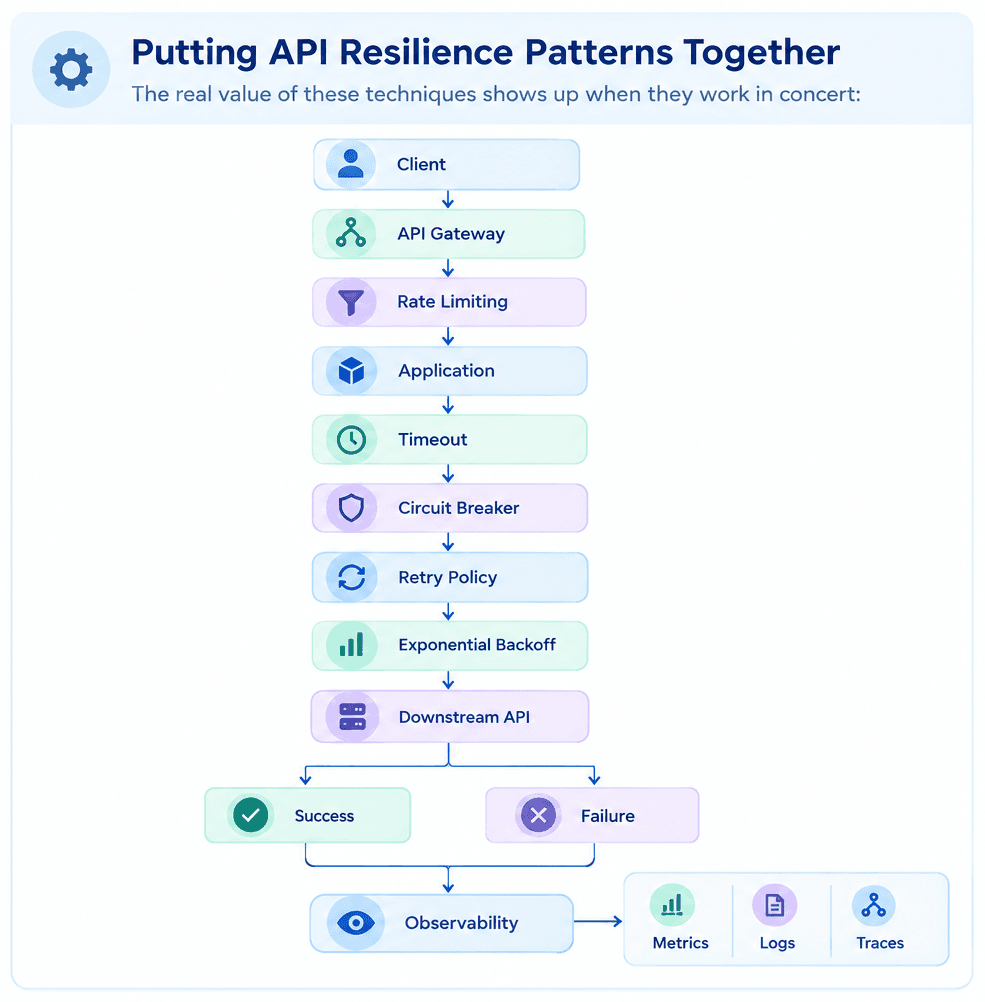
These patterns form a single resilience strategy:
| Pattern | Primary Purpose |
|---|---|
| Timeout | Prevent indefinite waiting |
| Retry | Recover from transient failures |
| Backoff | Avoid retry pressure |
| Jitter | Prevent synchronized retries |
| Circuit breaker | Stop calls to unhealthy dependencies |
| Rate limiting | Control incoming traffic |
| Bulkhead | Isolate resources |
| Queue | Buffer asynchronous work |
| Graceful degradation | Preserve critical functionality |
| Observability | Detect and diagnose failures |
Rate limiting protects the API from excessive incoming traffic. Bulkheads keep one workload from starving another. Queues pull asynchronous work off the critical path. Graceful degradation keeps important functionality alive when non-critical dependencies fail. Observability tells you whether these mechanisms are actually working.
A Practical Resilient API Checklist
Before shipping an API to production, run through these questions.
Rate Limiting
- Are high-volume clients controlled?
- Are limits scoped appropriately - client, tenant, user, endpoint?
- Does the API return meaningful 429 responses?
- Can clients tell when to retry?
Resource Isolation
- Can one workload consume resources meant for another?
- Are worker/connection pools properly isolated?
- Are concurrency limits defined?
Graceful Degradation
- Which features are truly critical?
- Which can be temporarily disabled?
- Can cached or partial responses be served instead?
Observability
- Are latency and error rates monitored?
- Are retries and timeouts measurable?
- Are distributed traces available?
- Can operators quickly identify the failing dependency?
Error Handling
- Do different failure conditions return meaningful status codes?
- Can clients distinguish between retryable and non-retryable failures?
- Does the API provide enough information for clients to recover correctly?
How Synoverge Helps Build Scalable and Resilient Digital Platforms
Designing a resilient API is rarely about implementing a single pattern.
It requires architectural thinking across application development, integrations, infrastructure, quality engineering, observability, and long-term product evolution.
This is where an experienced product engineering partner can add value.
Synoverge works with organizations on product and platform engineering, including building and modernizing digital platforms with a focus on scalability, availability, integration, quality, and maintainability.
Our product engineering capabilities span product development, re-engineering, DevOps and automation, quality engineering, and legacy modernization.
For API-driven platforms, this broader engineering approach can be particularly relevant when organizations need to:
- Build scalable digital products
- Modernize legacy applications
- Re-architect applications into modern service-based platforms
- Connect internal and external systems through APIs
- Improve application performance and reliability
- Introduce automated testing and quality engineering
- Modernize cloud-based application architectures
- Support evolving product and technology roadmaps
Synoverge's engineering work also includes API-based platforms and integrations.
For example, in one Synoverge case study, a U.S.-based route optimization platform was facing scalability challenges caused by high API traffic during peak usage. Synoverge modernized the platform with a scalable routing ecosystem, enabled API-based access for customers, and published APIs through Microsoft Azure Marketplace.
The modernization was completed without service disruption, demonstrating how scalability, API architecture, and business continuity can work together in a real-world platform.
For organizations dealing with aging applications, API integration challenges, scalability requirements, or complex distributed architectures, resilience can therefore become part of a broader application modernization and product engineering strategy rather than a standalone technical exercise.
The right approach depends on the existing architecture, workload characteristics, business priorities, and failure scenarios.
Conclusion
API resilience isn't a feature you bolt on after the fact - it's a set of engineering decisions built around one goal:
One failure should not become a system-wide failure.
Rate limiting protects services from excessive traffic. Bulkheads isolate failures. Queues buffer asynchronous work. Graceful degradation preserves critical functionality. Meaningful error responses help clients behave correctly. Observability tells engineers what's actually happening when things go wrong.
None of these mechanisms should be treated in isolation. They work together to contain failures and preserve useful service.
A resilient API should be able to answer:
What happens when a dependency is slow? What happens when a dependency fails? What happens when traffic suddenly spikes?
If those scenarios have been deliberately designed for, tested, observed, and measured, the API is far more likely to hold up when real-world conditions stop being ideal.
Distributed systems will fail. Networks will slow down. Dependencies will go unavailable. Traffic will spike. Connections will run out. Servers will crash.
Resilience isn't about pretending these things won't happen - it's about designing the system so that when they do, the failure stays contained, recovery stays possible, and the most important functionality keeps working.
In distributed systems, failure isn't an exception to the architecture.
Failure is part of the architecture - and resilient APIs are designed with that assumption from the start.
Frequently Asked Questions (FAQs)
API resilience is the ability of an API and its surrounding architecture to continue providing useful service when facing traffic spikes, dependency failures, timeouts, resource constraints, or other unexpected conditions.
The goal is not to eliminate every failure. It is to contain failures and keep critical functionality available.
Common API resilience patterns include rate limiting, timeouts, controlled retries, exponential backoff, circuit breakers, bulkheads, asynchronous processing, graceful degradation, and observability.
These patterns address different failure scenarios and are most effective when used as part of a broader resilience strategy.
Rate limiting prevents individual clients or workloads from consuming an excessive amount of API capacity.
By controlling incoming traffic, it can help protect system resources and reduce the risk that traffic spikes affect other users or services.
The bulkhead pattern isolates resources or workloads so that a failure or traffic spike in one area has a limited impact on others.
Examples include separate worker pools, connection pools, concurrency limits, isolated queues, and independent service instances.
Graceful degradation means an application continues providing its most important functionality even when one or more dependencies are unavailable.
For example, an e-commerce application might continue showing product information and prices even when its recommendation service is unavailable.
Observability provides visibility into how an API behaves through telemetry such as metrics, logs, and traces.
Without observability, teams may know that an API is failing without knowing which dependency, resource, or operation is responsible.
APIs can use several mechanisms to handle traffic spikes, including rate limiting, throttling, concurrency controls, autoscaling, queues, caching, resource isolation, and appropriate timeout and retry policies.
The right combination depends on the architecture and workload.
Cascading failures can be reduced by limiting incoming traffic, isolating resources, setting timeouts, controlling retries, using circuit breakers, moving suitable work to asynchronous processing, and designing graceful fallback behavior.
Observability is also important because teams need to detect failure propagation quickly.
Table of Contents
- n API can remain healthy at the dependency level and still fail under pressure.
- Rate Limiting: Protect Your API From Excessive Traffic
- Return the Right Response When Rate Limited
- Use Bulkheads to Isolate Failures
- Graceful Degradation
- Use Asynchronous Processing to Reduce Failure Propagation
- Observability Is Part of Resilience
- Don't Hide Failures Behind Generic 500 Responses
- Common API Resilience Anti-Patterns
- A Practical Resilient API Checklist
- How Synoverge Helps Build Scalable and Resilient Digital Platforms
- Conclusion
- Frequently Asked Questions (FAQs)


Is Your API Architecture Built for Resilience?
Let our experts help you design reliable APIs.
Contact UsRelated Blogs

Software Development, Artificial Intelligence
AI-DLC: The Future of AI-Driven Software Development
By Viren Purohit 08 Jun, 2026
Discover how AI-DLC enables AI-assisted software delivery, operational intelligence, scalable engineering workflows, and AI-native development ecosystems for enterprises.


Software Development, Artificial Intelligence
How AI-DLC Is Reshaping Modern Software Engineering Workflows
By Viren Purohit 22 Jun, 2026
Discover how AI-DLC enables scalable software delivery through AI-driven collaboration, governance, lifecycle orchestration, and engineering consistency.

Software Development
Designing Resilient APIs: Timeouts, Retries & Circuit Breakers
By Viren Purohit 06 Oct, 2026
Learn how to build resilient APIs using timeouts, retries, exponential backoff, jitter, and circuit breakers to prevent cascading system failures.